

WinSport Drive-In Movie: Untold stories from the filming of Cool Runnings
Aug 6, 2026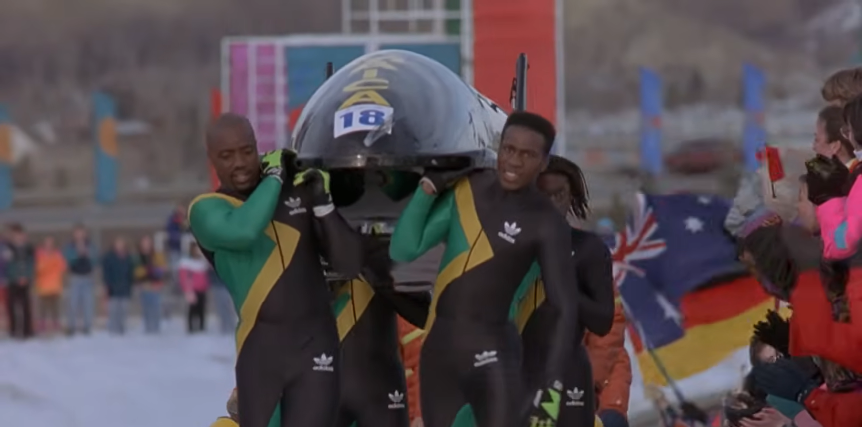
For more than 30 years, Leon Robinson has been regularly recognized for his starring role in this heartwarming and hilarious movie.
“I hear from people all the time, ‘Oh, I just watched Cool Runnings with my kids. They loved it,’” said Robinson, who goes professionally by Leon. “All the time, people talk about Cool Runnings. Either they grew up on it and it was their childhood memory, or they’re showing it to their kids. People just keep introducing it to generations and generations. I think it’s fantastic.”
WinSport will soon introduce a new generation of Calgarians to Cool Runnings. Disney’s sports comedy, filmed in the winter of 1993 and released later that year, will be featured on a jumbo-sized outdoor screen at our first-ever Drive-In Movie on Thursday, Aug. 13. Parking spots are still available, and this story of perseverance, courage and hope is appropriate for the entire family.
There is a special connection to WinSport — Cool Runnings was inspired by the story of the Jamaican Bobsled Team at the Calgary 1988 Winter Olympics, and much of the movie was filmed here at Canada Olympic Park, including all of the sliding scenes.
We don’t want to spoil the plot, but we are excited to share some of the untold stories from the making of Cool Runnings, as recounted by the stars of the film and by Calgarians who worked behind the scenes on this production:
This isn’t an exact account from Calgary ’88
The Jamaican Bobsled Team did capture the hearts of fans during the Calgary 1988 Winter Olympics, but Cool Runnings is only loosely based on their story.
“To say that we took some leeway is a ridiculous understatement,” said Jon Turteltaub, the director of Cool Runnings. “It is so factually different than what actually happened. I don’t think today you could make that movie — the internet wouldn’t let you do something like that. But we knew what movie we were making. We knew this was a story of ordinary people doing extraordinary things. We knew this was a story of the underdog having a triumph, but not a victory. And when you have that, you need to know what that triumph is. And so that forces you to build real emotion and real drama into the characters. It was their personal victories that had to work, so the characters got deeper and more interesting.”
Audiences certainly embraced those characters.
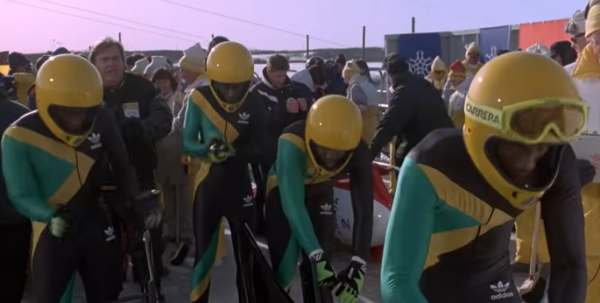
Leon played Derice Bannock, determined to keep his Olympic dreams alive after he’d missed out on the opportunity to represent Jamaica in track and field.
Doug E. Doug was cast as Sanka Coffie, a pushcart derby champion.
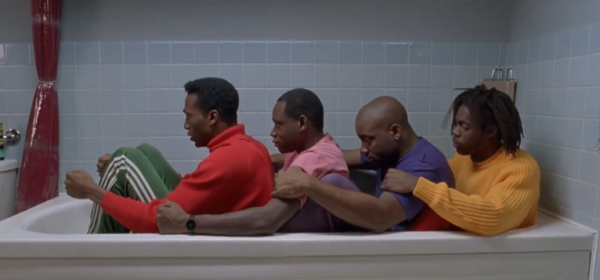
They were joined in the sled by Junior Bevil (Rawle D. Lewis) and Yul Brenner (Malik Yoba).
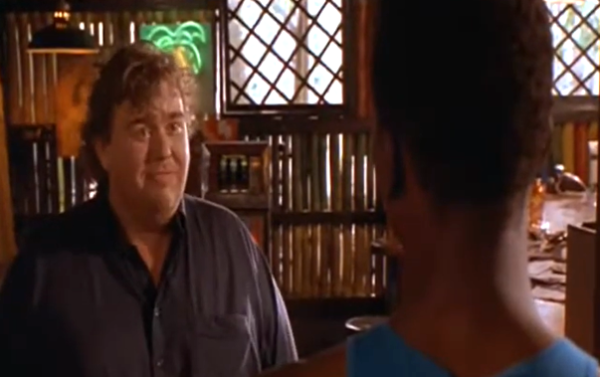
Their disgraced coach, Irv Blitzer, was portrayed by Canadian icon John Candy.
“The minute I put on that skintight outfit, I really started to feel like a bobsledder,” Lewis reminisced. “The feel of it, putting on the helmet and everything, definitely puts you right into the mode of being or portraying someone. And you feel a responsibility because you want to not let them down and do a bad rendition of them, you know?”
It was like the Olympics all over again
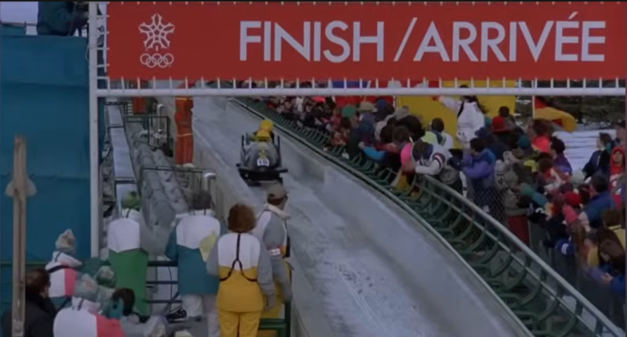
While much of the storyline was fictionalized for the big screen, the atmosphere at Canada Olympic Park had a familiar feel to it.
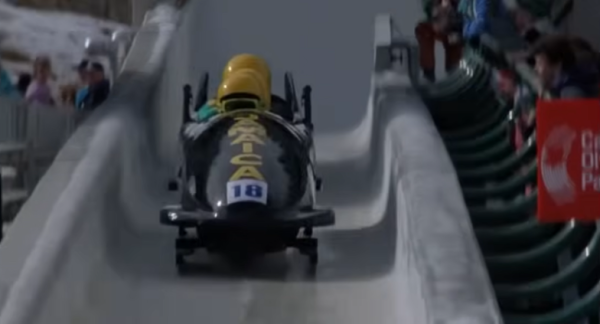
The bobsled action was filmed on WinSport’s sliding track, an ’88 Olympic venue that hosted countless world-class events before it was decommissioned in 2019. One of the bobsleds from Cool Runnings is now on permanent display outside the Day Lodge, a popular photo stop for visitors from around the world.
Allan Belyea, a longtime Calgary resident, counts Cool Runnings as the first major industry movie in his career as a motion-picture grip. He was hired for a two-week span as daily help — “They needed us for the big epic race scenes.”
“It was a lot like we all remembered from a few years prior during the 1988 Olympics,” Belyea said. “A lot of the extras were, in fact, volunteers from the Olympics, in part because they didn’t have to dress them. They could bring their own outfits and still had all their volunteer regalia. It was honestly like being back at the top of the bobsled run during the Olympics.
“You had the actual runs happening, people watching, cameras rolling, camera teams moving around ... It was electric pretty much non-stop.”
The actors were struck by that same energy.
“Stepping into those spaces, you couldn’t have told me it wasn’t the actual 1988 Olympics,” said Doug E. Doug, who is based in New York City. “They had done such a fantastic job of recreating it.”
“Being in Calgary, where the actual thing went down, just a few years later, it was kind of cool because we were running into a lot of people who were telling us stories — ‘I was there, man! I saw the whole thing!’” Lewis agreed from his home in Los Angeles. “That was kind of exciting because you were hearing all these stories about it.
“You also realize that you’re a part of something really monumental and really big, you know? Because everybody in Calgary had just seen it.”
A chuckwagon ace was in the sled for filming
Jason Glass is a standout in the sport of chuckwagon racing. He’s accustomed to flying around the racetrack at incredible speeds.
As a stuntman in Cool Runnings, Glass gained a new appreciation for the athletes in bobsled. He was a brakeman for the sliding scenes. He estimates he rumbled down the icy track about 50 times with the movie cameras rolling.
“Oh, it was so much fun,” said Glass, who lives in High River, Alta., and is a two-time champion of the Calgary Stampede’s Rangeland Derby. “I couldn’t believe the power and the force and just how your body just takes a beating.
“It was amazing. You’re absolutely flying and it’s tight quarters and it’s hard on your elbows and everything. But it was so much fun.”
The stunt pilot for Cool Runnings was the late Stuart Thorpe. He wasn’t the only experienced bobsledder on set — many others from the sport were hired on as extras.
Calgary’s Tom Samuel, who later competed for Canada on the international circuit and then coached Jamaica at the 2014 Sochi Olympics, can recall a few knee-slapping stories from the filming of a movie that brought a ton of positive attention to bobsledding.
“It took off afterwards. We didn’t know it would be a huge hit,” said Samuel, then sliding at the provincial level. “So the excitement for us was, ‘Ok, we get free food. We get $20 an hour, which at that time was outrageous. And we get to say we’re in a movie.’
“Us bobsledders were all broke. I still remember the first day of filming, they brought a food truck from Vancouver. There were probably a couple of them, but I remember this one guy from Vancouver and he was parked at the top of the bobsled track. So we break for lunch and they say, ‘Go to the food truck and get your lunch.’ All of us bobsledders, we’d go get a plate full and we’d eat it and then we’d go back in line and get another plate. And this just kept going. It was like every bobsledder hadn’t had food for three weeks. We actually ate all the food, and then the actors and the director had no lunch. The guy was so mad at us.”
The biggest challenge? There was a shortage of snow
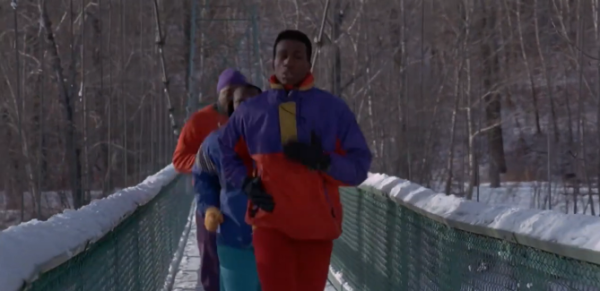
The filmmakers were imagining a winter wonderland, but Mother Nature didn’t exactly deliver.
“It was unseasonably warm,” Leon recalled from New York City. “Just like it was for the 1988 Olympics, which is crazy.”
Just like during the 1988 Winter Olympics, the show had to go on.
This was back before computer-generated imagery, so some creativity was required.
“We had a scout go to Calgary in the fall, but we had no idea what it would look like with snow,” said Turteltaub, who lives in the Los Angeles area. “But it didn’t seem to matter, because there wasn’t much snow when we got there anyway. So much of the snow that you see in the movie is just fake snow blankets and things like that. We were avoiding things and framing out things and looking for scenes to shoot where we could see snow. That little riverbed, where they run across the bridge? That was just purely because there was snow there.
"We learned all about your Chinook winds. I became quite an expert in Calgary weather — it snows and then two days later, it was back to just being brown. That sounds familiar, I’m sure. You want it to not just look like winter. For a movie, you want it to look the same for a scene in the morning and a scene in the afternoon. That got a little tricky.”
Consistency was also key while filming in Jamaica.
A winter getaway to the Caribbean … Sounds nice, right? But for Candy, this wasn’t exactly a beach vacation.
“They had to keep our Dad out of the sun for continuity,” recalled Jennifer Candy-Sullivan with a laugh.
While Candy didn’t always bring his family to his movie shoots, this was a special occasion.
“My birthday is February 3rd, and we were in Calgary for my birthday,” said Candy-Sullivan, who now works in the movie industry in California as an actress and producer. “I had my 13th birthday in Calgary. I remember going shopping and we went to the Calgary Zoo and we went skiing. I remember it very well.”
John Candy left a lasting impression
What was it like working with John Candy? Everybody seems to light up when you ask this question.
“I think the words John Candy should be synonymous with smile,” Lewis said. “Because every time I think of John Candy, it makes me smile.”
That was Candy’s specialty.
Before Cool Runnings, he was already one of North America’s biggest comedy stars. Candy passed away in 1994, so this was among his final movies.
“The thing is everybody thinks John is funny and the greatest guy and loves Canada and is a joy to be around,” said Turteltaub, who remembers attending a hockey game with Candy at the Saddledome and his patience in signing autographs for adoring fans as they tried to exit the arena. “And what’s crazy is that it is 100 percent true.”
“Twice the first day, they had to say, ‘John! John, we have to shoot!’ Because he was in the middle of another long string of jokes,” Belyea recalled. “He just kept everyone busting a gut all the time. It’s like, camera would be hovering with the clapboard while he’s finishing a joke, just to try to impress him with the need to stop talking.”
What meant the most to Doug E. Doug is that Candy didn’t insist on being the centre of attention when the cameras were on. Quite the opposite.
“He was such a good man, and working with him on a creative level was probably the best thing we could have,” he said. “He was an artist with enormous stature, but he gave so much space. And that is a very generous thing. He wanted us to be out front. He wanted our talents to be showcased.”
Candy-Sullivan believes her Dad would be delighted that Cool Runnings is still considered a must-see by so many.
“I think he would be shocked, but I think he would also be really happy,” she said. “I think it’s still a classic — one of those traditional Disney family films ... It’s such a great story and it’s heartwarming and the cast is amazing. All the actors that they cast in it, I think they just did such a great job.”
So what’s the secret to success?
Why does Cool Runnings still resonate with audiences?
Why is the message still so relevant today?
Why is Leon, more than three decades later, regularly recognized as Derice Bannock and often approached by fans of the film?
“The overwhelming sentiment, I think, is it’s a fish-out-of-water story,” Leon said. “Everybody can relate to being the only one of your kind someplace and what that would be like. And when you see it on screen, you can’t help but root for that person or that team.
“And there’s more. It’s the challenge of overcoming things, no matter what people are saying about you, no matter how people doubted you. And it’s just a funny joyride at the same time.”
Turteltaub, from the director’s chair, added another theme to the list.
“There was one word that was our guiding principle, and it’s going to sound strange, but it made all of the difference,” he said. “We always felt this was a movie about dignity — the pursuit and the need for and what you deserve. That’s what these guys were fighting for more than anything else. The movie, it can be silly and it can be goofy. But at its soul, you’re discovering dignity. Audiences took to these guys as exactly what we’re talking about — as people that they, even themselves, would have dismissed.
“I love that Canadians love this movie and embraced this movie,” he added. “I think there’s an invitation to love it because of Calgary and because of John Candy, but I think they found something very Canadian in the movie — this winter spirit and good people doing their best and doing something as a team. There is something very Canadian about that, I think.”
At our first-ever Drive-In Movie, WinSport is excited to show Cool Runnings to a generation of Canadians that may not have seen it before.
Viewers will recognize many Calgary locations. In addition to the beautiful backdrop of Canada Olympic Park, there are scenes from Calgary International Airport, the Olympic Oval, Ranchman’s country bar, the Sandy Beach area along the Elbow River and elsewhere around the city.
“I hope families will take away from the movie what I’ve tried to communicate to kids and families over the last 30-some years,” Doug E. Doug said. “That is that you can rise above adversity, your attitude determines your altitude, you can go as far as you want, opposition is not the final answer to your destiny, and your uniqueness is a superpower. Differences are beautiful.”